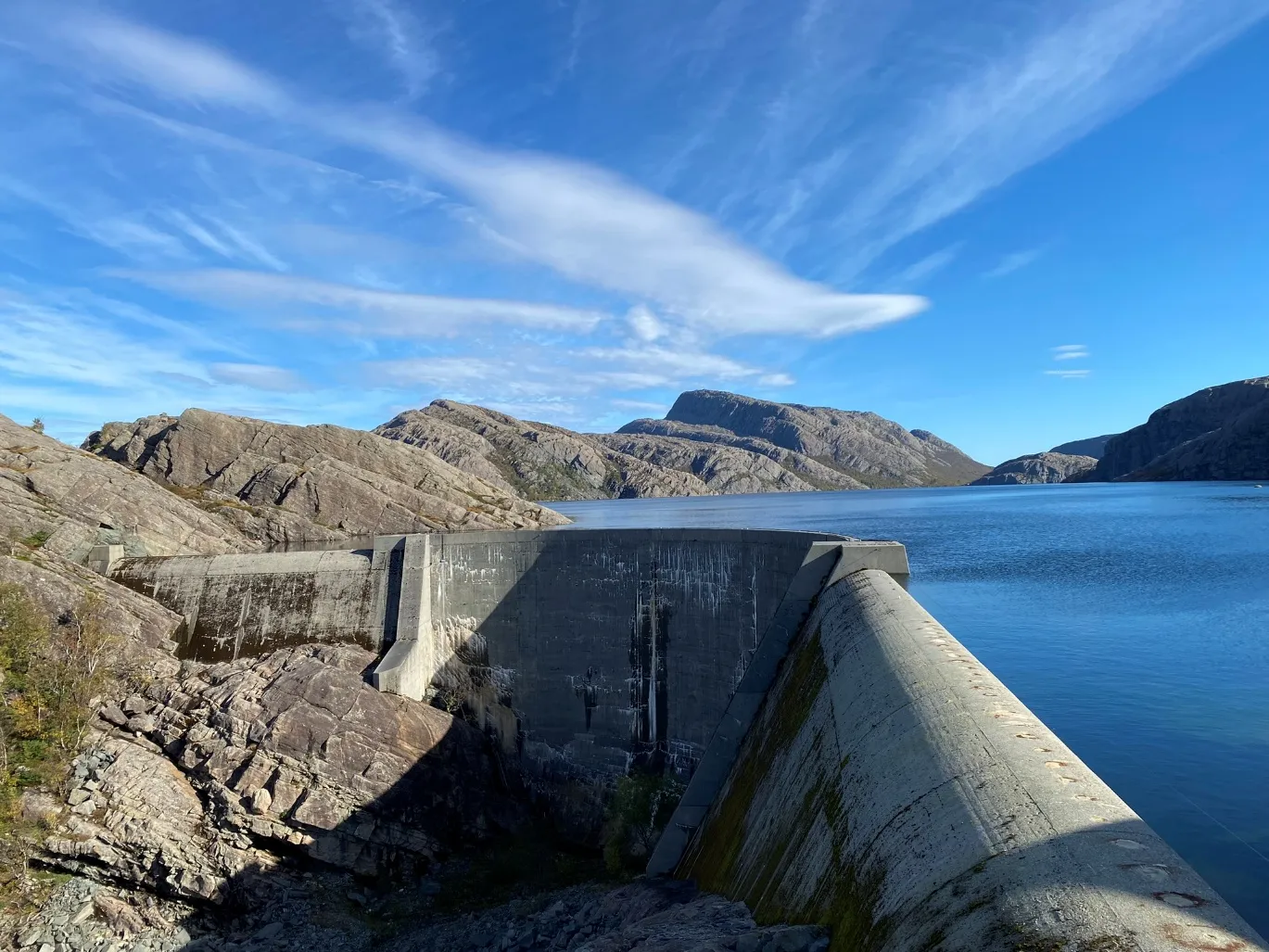
A Century of Service – Knowing the True Condition of Concrete Dams
Few structures carry greater consequences than dams. They hold back water under sustained pressure, endure freeze–thaw cycling and seasonal thermal loads, and are expected to remain safe for many decades — often far beyond their original design life. Yet some of the most important deterioration mechanisms and defects are hidden inside the concrete: internal cracking, deteriorated construction joints, voids and honeycombing from original mass-concrete pours, and damage associated with mechanisms such as freeze–thaw deterioration or alkali–silica reaction (ASR).
Dam safety programs are rightly conservative, and coring into a dam body can be expensive, time-consuming and intrusive. Elop Insight adds a scalable, non-destructive testing (NDT) method for concrete dam inspection: large-area ultrasonic scanning that can map internal features and document concrete condition without drilling or coring. Where the geometry and access conditions are suitable, scanning can be performed from one accessible surface.
How Elop Creates Value for Dam Stakeholders
For owners and dam safety engineers
-
Evidence for safety assessments: Periodic reassessments and regulatory reviews require documented information about structural condition. Large-area ultrasonic scan data can complement visual inspections, targeted coring and other NDT methods by providing information about the internal condition of concrete.
-
Life extension with greater confidence: Many dams are candidates for rehabilitation, uprating or life extension. Better knowledge of the internal condition of concrete supports engineering decisions and helps identify areas requiring further investigation.
-
Baseline and condition history: Scan data stored in the Insight Portal can establish a documented baseline. Repeat surveys can then be compared to identify changes in mapped cracking, joints, voids or other anomalies over time.
For inspectors and engineers
-
Deep concrete imaging: Elop Insight uses ultrasonic frequencies including 50 kHz, enabling inspection at greater depths in suitable concrete. Under favorable conditions, concrete thickness and internal anomalies can be investigated at depths of up to approximately 2 meters.
-
Construction joint and interface assessment: Construction joints, lift lines and interfaces between original concrete and repair materials can be investigated for indications of discontinuities, poor bonding or separation.
-
One-sided access: Where the surface geometry and scanning conditions are suitable, ultrasonic inspection from one accessible side can provide information about the concrete without requiring access to the opposite face.
For society
-
Dam safety: Dam failures and serious incidents can have severe downstream consequences. Better information about internal concrete condition supports earlier identification of areas that require further engineering assessment or maintenance.
-
Renewable energy reliability: Hydropower depends on the long-term performance of dams and associated concrete structures. Data-driven inspection and maintenance can support safe, reliable and efficient operation.
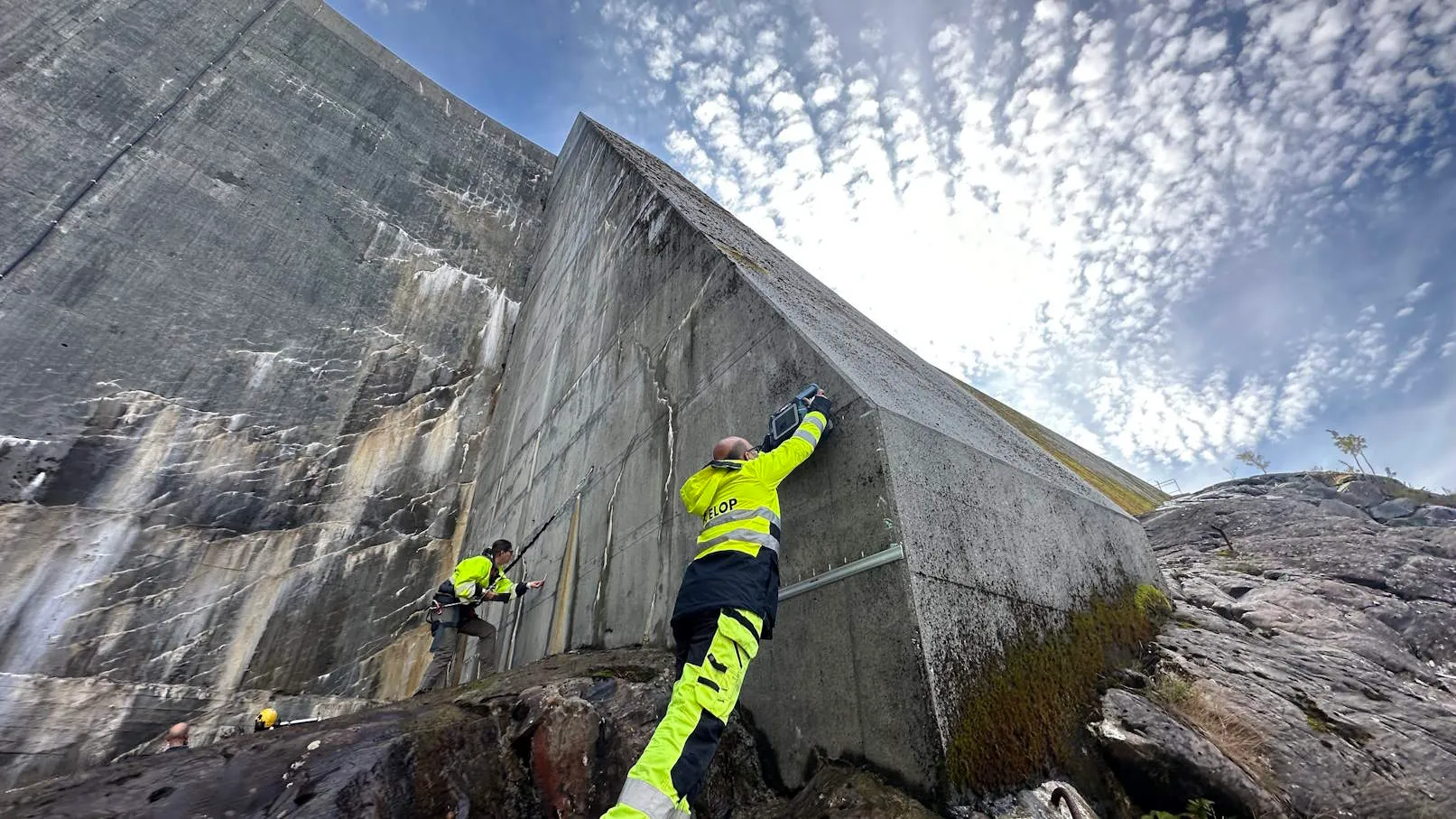
Figure 1. Elop Insight used for ultrasonic inspection of a concrete dam affected by alkali–silica reaction (ASR). The application of non-destructive testing methods, including ultrasonic scanning, for assessing ASR-related damage in concrete dams is discussed in [1].
Typical Findings in Concrete Dams and Hydraulic Structures
-
Internal cracking: Mapping of subsurface discontinuities and investigation of the internal extent of cracks where ultrasonic conditions allow them to be detected.
-
Construction joint defects: Indications of poorly bonded lift joints, discontinuities and separation along construction interfaces.
-
Voids and honeycombing: Detection and mapping of significant voids, air pockets and areas of poor concrete consolidation in mass concrete, spillways and walls.
-
Concrete thickness assessment: Measurement and mapping of concrete thickness in suitable walls, slabs, linings and other accessible concrete sections.
Practical Considerations for Dam Concrete Inspection
Dam concrete is often old, coarse-aggregate mass concrete with variable moisture content and heterogeneous material properties. These factors can influence ultrasonic velocity, attenuation and image quality and must therefore be considered during interpretation.
Ultrasonic scanning should be treated as part of a broader dam inspection and assessment program rather than as a standalone diagnostic method. For mechanism-specific questions — for example, assessing potential ASR-related damage or characterizing freeze–thaw damage — ultrasonic scanning can be combined with targeted coring, laboratory testing and petrographic or microstructural analysis. The scan can help identify and map areas of interest and support more targeted selection of locations for further investigation.
From Periodic Inspection to a Documented Condition History
With comparable 3D scan data from successive inspection cycles, dam owners can move from isolated inspection snapshots toward a documented history of concrete condition. Repeat ultrasonic surveys can help identify changes in mapped anomalies and support decisions about further investigation, maintenance and rehabilitation.
For long-life infrastructure such as concrete dams and hydraulic structures, this combination of large-area NDT and targeted investigation can provide a more complete basis for safe and economical asset management.
Contact us to discuss non-destructive testing and concrete dam inspection with Elop.
Reference
[1] Lindgård, J., Bjerke, W., Chapagain, K. R., Reknes, K., Kjærnsmo, H. E., Stemland, K. M., Isaksen, H. R., Isdahl-Engh, D., Konow, T., & Brunstad, Ø. (2025). Alkali-silica reactions (ASR) in concrete dams – field survey, ND-testing and laboratory analyses. MATEC Web of Conferences, 409, 03001. https://doi.org/10.1051/matecconf/202540903001