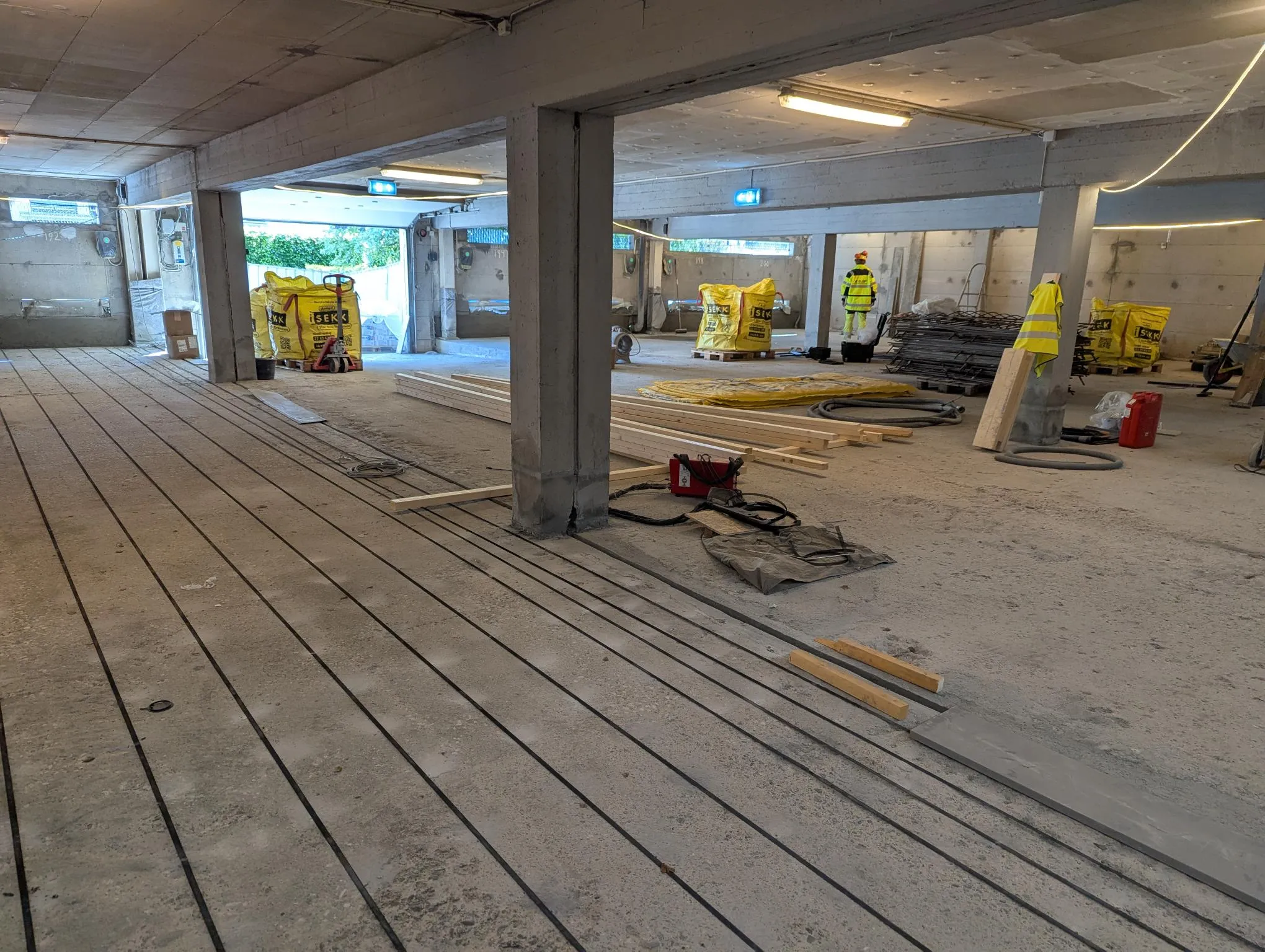
Trust Your Floor – Verify Concrete Slabs Before and After They Carry Load
Industrial floors and building slabs are easy to take for granted — until racking legs encounter a weak zone, a forklift route starts cracking, or a new tenant requires documentation of the existing floor condition.
The performance of a concrete floor slab depends on features that cannot be seen from the surface: actual slab thickness, internal defects, layer bonding, fiber distribution in fiber-reinforced concrete, and voids or honeycombing caused during casting.
Elop Insight provides non-destructive concrete floor inspection and slab thickness mapping to reveal what is beneath the surface. On new construction projects, rolling ultrasonic scanning can verify slab thickness and identify potential variations and defects within the concrete before handover. On existing buildings, it helps locate hidden defects associated with cracking, settlement and deterioration — without drilling cores through an active warehouse or industrial floor.
How Elop Insight Creates Value for Building Stakeholders
For Owners, Developers and Contractors
-
As-built verification: Documented floor slab thickness and internal condition at handover provide objective evidence for both clients and contractors and help resolve disputes with measured data.
-
Due diligence: Concrete floor scanning provides factual information about slab condition during property transactions, changes of use, or when planning increased floor loads from heavier racking, automation or machinery.
-
Minimal disruption: Dry-coupled ultrasonic scanning can be performed around racking and traffic areas without coring, dust or extended operational downtime.
For Inspectors and Engineers
-
Continuous slab thickness mapping: Map floor slab thickness and backwall response across large areas instead of relying on a limited number of core samples. Elop Insight can measure concrete thickness up to 2 m under favorable conditions.
-
Layer and bond assessment: Identify potential debonding between toppings, screeds and structural slabs, as well as internal horizontal defects within the concrete.
-
Fiber-reinforced concrete inspection: Scan and image fiber-reinforced concrete (SFRC) floors to support quality control and assessment where conventional inspection methods provide limited information.
For Society
-
Safety: Deficient or deteriorated floor slabs can create risks in warehouses, industrial facilities and public buildings. Non-destructive inspection helps identify areas requiring further engineering assessment before loads or use are increased.
-
Resource efficiency: Demonstrating that an existing concrete slab remains in suitable condition can support reuse and change of use instead of unnecessary demolition and recasting.
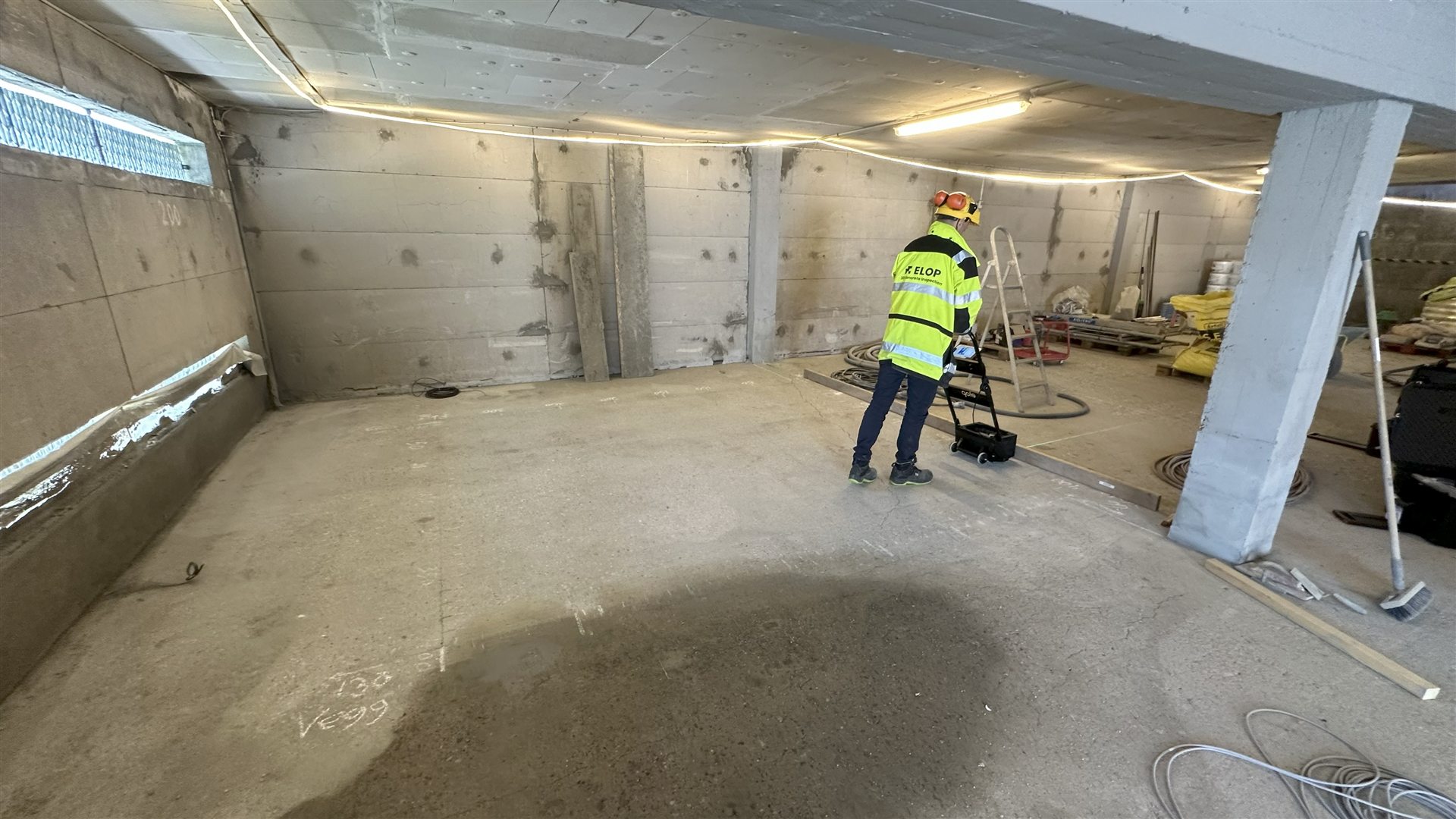
Figure 1. Elop Insight scanner during floor scanning, with C-scans at various depths showing reflections from the bottom of the floor and indicating variations in floor thickness (top left).
What Can Elop Insight Detect in Concrete Floor Slabs?
Floor Slab Thickness Variations
Areas where the concrete slab is thinner than designed can affect performance and may contribute to premature cracking or inadequate structural performance. Concrete thickness mapping helps identify these variations across the scanned area.
Voids and Honeycombing
Poor consolidation during casting can create voids and honeycombing within concrete. These defects may be particularly important around joints, penetrations and areas with congested reinforcement. Ultrasonic concrete scanning can help identify areas requiring further investigation.
Debonding Between Concrete Layers
Toppings, screeds and overlays can become separated from the underlying concrete slab. Elop Insight can help identify areas of potential debonding and loss of bond between concrete layers.
Internal Slab Delamination
Internal horizontal defects and delamination can be associated with reinforcement corrosion, overload, shrinkage, or other deterioration mechanisms.Detecting these defects before they become visible at the surface can support targeted investigation and maintenance.
Embedded Reinforcement, Pipes and Conduits
Before drilling, coring or sawing, it is important to understand what is embedded in the concrete. Elop Insight can help locate reinforcement, pipes and conduits and provide information about their position within the slab.
Practical Considerations for Concrete Floor Inspection
Loss of subgrade support, such as voids beneath a slab-on-ground, may influence the ultrasonic backwall response and can sometimes be identified indirectly. Where subgrade voids are critical to the assessment, Elop Insight results should be evaluated together with complementary inspection methods.
Surface coatings, very rough surfaces or contaminated floors may also affect scanning conditions. A quick site assessment can determine whether the floor is suitable for ultrasonic scanning.
From Unknown to Documented
A floor slab documented by a stored, repeatable 3D ultrasonic scan is no longer an unknown. Building owners and engineers can use inspection data to document existing conditions, compare scans over time, support changes in building use, and focus maintenance and further investigation where the data indicates a potential problem.
Whether you are inspecting a newly constructed warehouse floor, assessing an existing industrial building, or investigating defects in a concrete slab, Elop Insight provides fast, non-destructive concrete floor inspection without the need for extensive coring.
Contact us to discuss your next floor slab inspection.