Parking structures face a uniquely aggressive exposure: every winter, vehicles carry de-icing salt onto concrete decks. In enclosed and partially enclosed garages, chloride-laden moisture can penetrate the concrete and accelerate reinforcement corrosion. One of the most serious consequences is concrete delamination above corroding reinforcement — damage that can develop beneath an apparently intact surface and may remain hidden under membranes, coatings or asphalt overlays.
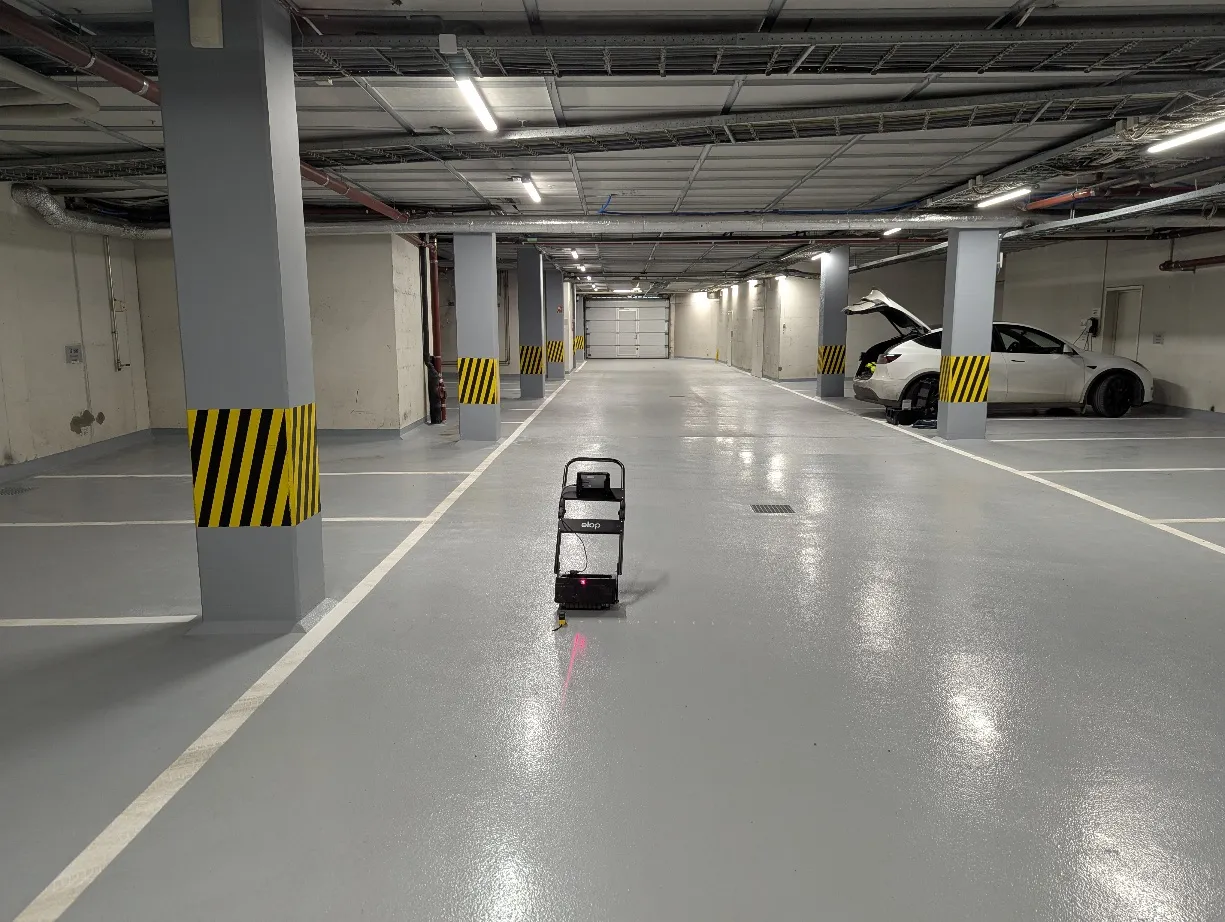
Figure 1: A typical concrete parking with Elop Insight scanner mounted in a trolley.
By the time delamination becomes visible through cracking, spalling or exposed reinforcement, the required repair can already be extensive. Elop Insight enables non-destructive parking structure inspection, using rolling ultrasonic scanning to map delamination, corrosion-related damage zones and concrete slab thickness across entire parking decks, level by level.
How Elop Insight Creates Value for Parking Structure Owners and Inspectors
For owners and facility managers
-
Repair budgets based on facts: Scans quantify the extent of delaminated concrete, helping distinguish targeted repair areas from sections that do not require rehabilitation.
-
Minimal disruption: No drilling, gel or liquid couplant is required. Scanning can be performed section by section around parked vehicles and traffic, helping reduce disruption to facility operations.
-
Condition monitoring: Scan data stored in the Elop Insight Portal can be compared over time, helping owners monitor deterioration and plan maintenance before defects become more extensive.
For inspectors and engineers
-
Beyond chain drag: Traditional sounding methods can identify some shallow delamination, but results can be subjective and difficult to document consistently. Ultrasonic imaging provides depth-resolved information and a digital record of the inspected area.
-
Inspection beneath overlays: Depth-resolved imaging can help distinguish debonding near an overlay or repair layer from deeper structural delamination within the concrete slab.
-
Direct repair mapping: C-scan heatmaps provide a visual representation of affected areas that can support repair planning, quantity estimation and tender documentation.
For safety and sustainability
-
Improved safety: Falling concrete, exposed reinforcement and progressive deterioration can create safety risks in aging parking structures. Earlier detection supports proactive maintenance and repair.
-
Lower lifecycle impact: Identifying and repairing deterioration at an earlier stage can reduce the extent of later rehabilitation and the associated use of new construction materials.
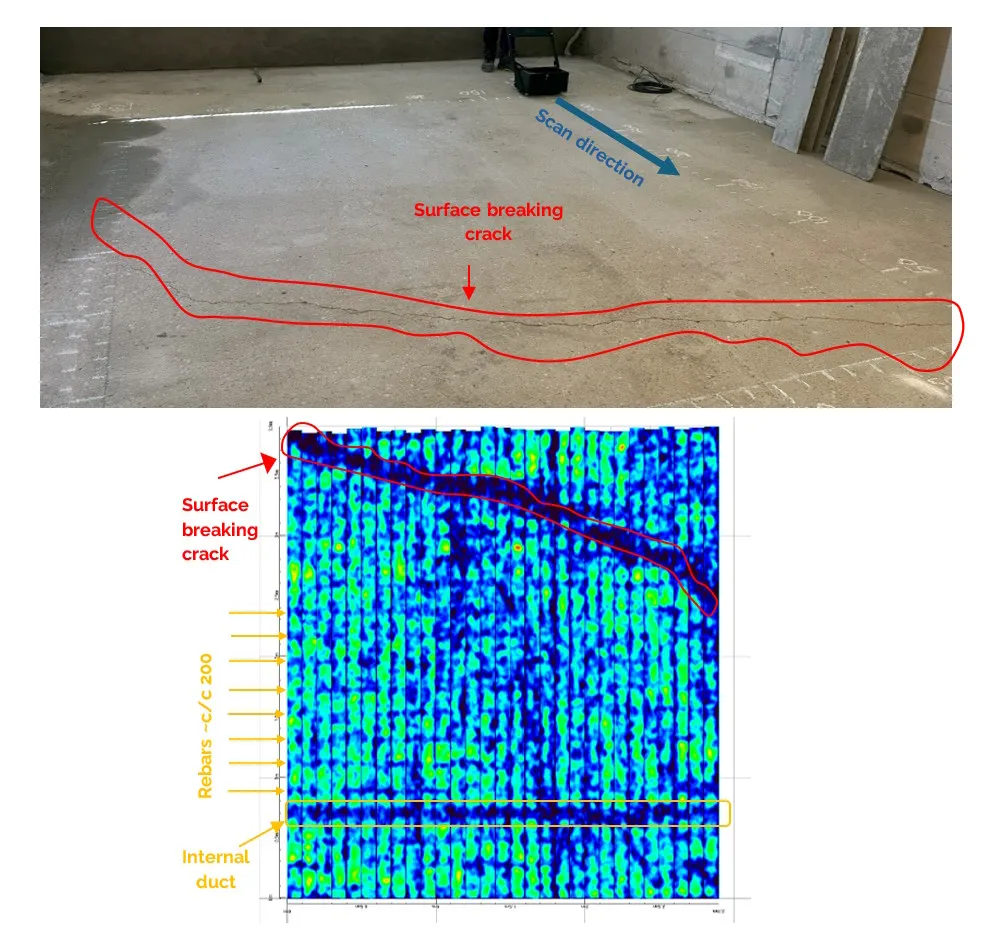
Figure 2: Elop Insight C-scan showing the backwall echo and a surface-breaking crack on a concrete parking floor.
Elop Insight can reveal a range of hidden and visible defects and conditions in concrete parking structures, including:
Delamination
Horizontal separation within the concrete, often developing around reinforcement as corrosion progresses. Elop Insight can map the location and extent of detectable delamination within the scanned area.
Corrosion-Related Damage Zones
Areas of deteriorated or cracked concrete associated with reinforcement corrosion can be identified through ultrasonic imaging. While Elop Insight does not directly measure chloride concentration or corrosion activity, ultrasonic imaging can reveal the mechanical damage associated with deterioration.
Overlay and Repair-Layer Debonding
Loss of bond between an overlay, topping or repair layer and the underlying structural concrete. Depth-resolved ultrasonic imaging can help identify separation between different material layers.
Honeycombing and Concrete Thickness
Construction-related defects such as honeycombing can reduce concrete quality, while variations in slab thickness can be important for structural assessment. Elop Insight can map detectable honeycombing and provide concrete thickness measurements across the scanned area.
Practical Considerations for Parking Garage Inspection
Ultrasonic inspection maps the mechanical damage caused by deterioration, such as delamination and cracking. It does not directly measure chloride concentration or corrosion activity.
For a complete condition assessment, best practice can therefore combine non-destructive ultrasonic concrete inspection with complementary methods such as half-cell potential measurements, chloride profiling and targeted destructive investigation. Elop Insight can help identify areas where these more localized measurements are most valuable.
From Reactive Patching to Planned Parking Structure Maintenance
Parking structures are often repaired reactively, one visible spall or damaged area at a time. A more data-driven approach is to inspect larger areas, map the actual extent of deterioration and use the resulting condition data to prioritize repairs.
With full-deck scan data stored in the Elop Insight Portal, owners and engineers can compare inspection results over time, plan maintenance according to condition, prioritize repair budgets and maintain a documented digital record of the structure’s condition.
Ready to see what is inside your parking structure?
Contact us to discuss a pilot scan of a parking level or another large concrete deck.