Seeing Behind the Lining
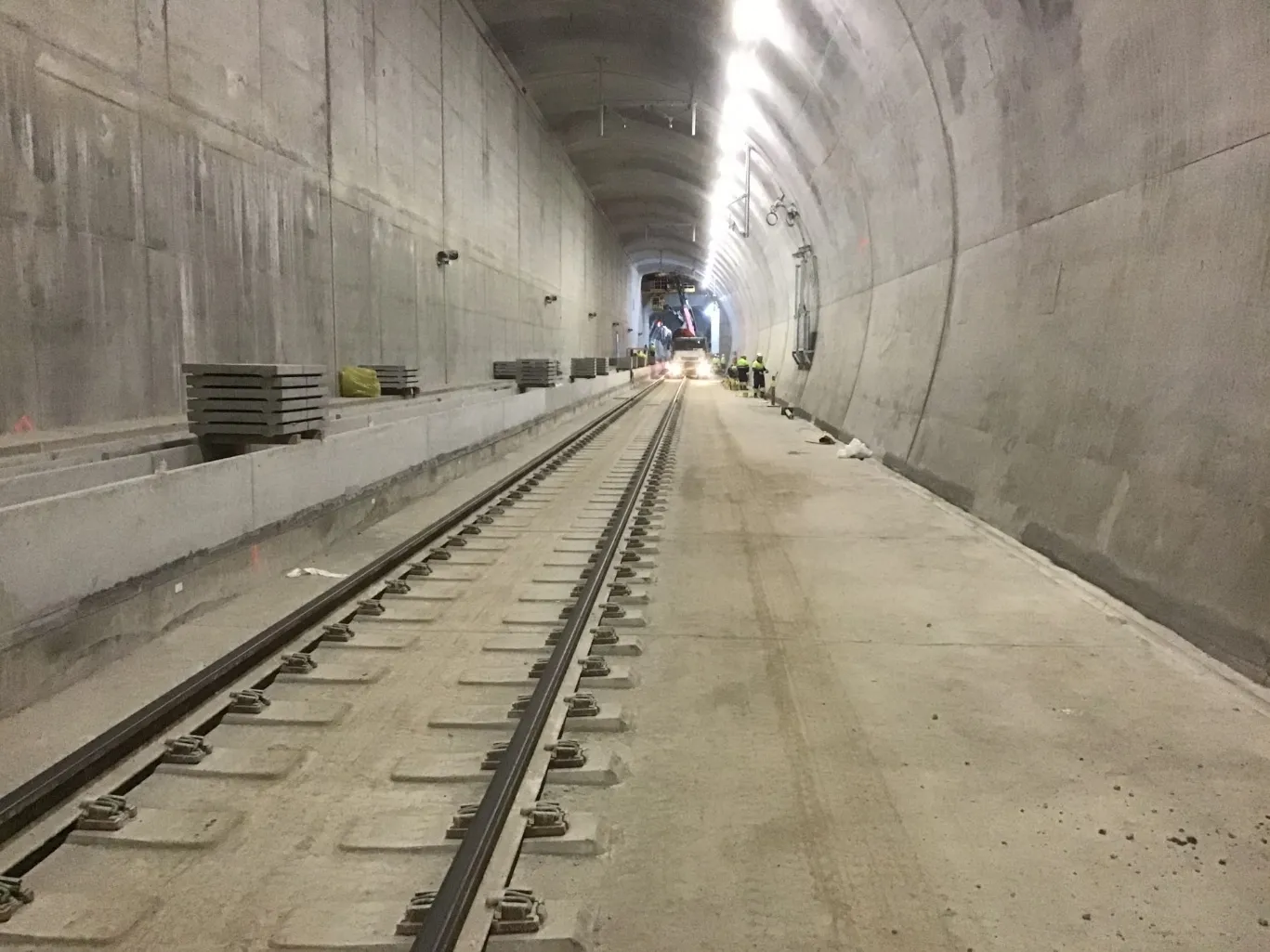
Tunnel linings perform critical structural and protective functions. They withstand rock and earth pressure, control groundwater, and protect infrastructure and road or rail traffic, often for many decades. However, many of the defects that can affect tunnel performance are hidden beneath the surface.
Voids behind the lining, incomplete backfill or contact grouting, debonding between shotcrete layers, and variations in concrete thickness may not be visible during a conventional visual inspection. A tunnel lining can therefore appear intact while hidden conditions may affect its quality and long-term performance.
Traditional tunnel inspection methods often combine visual inspection, hammer sounding and selective core drilling. While these methods provide valuable information, they are generally limited to surface assessment or measurements at selected points. Core drilling is also intrusive and can be difficult to perform in operational tunnels.
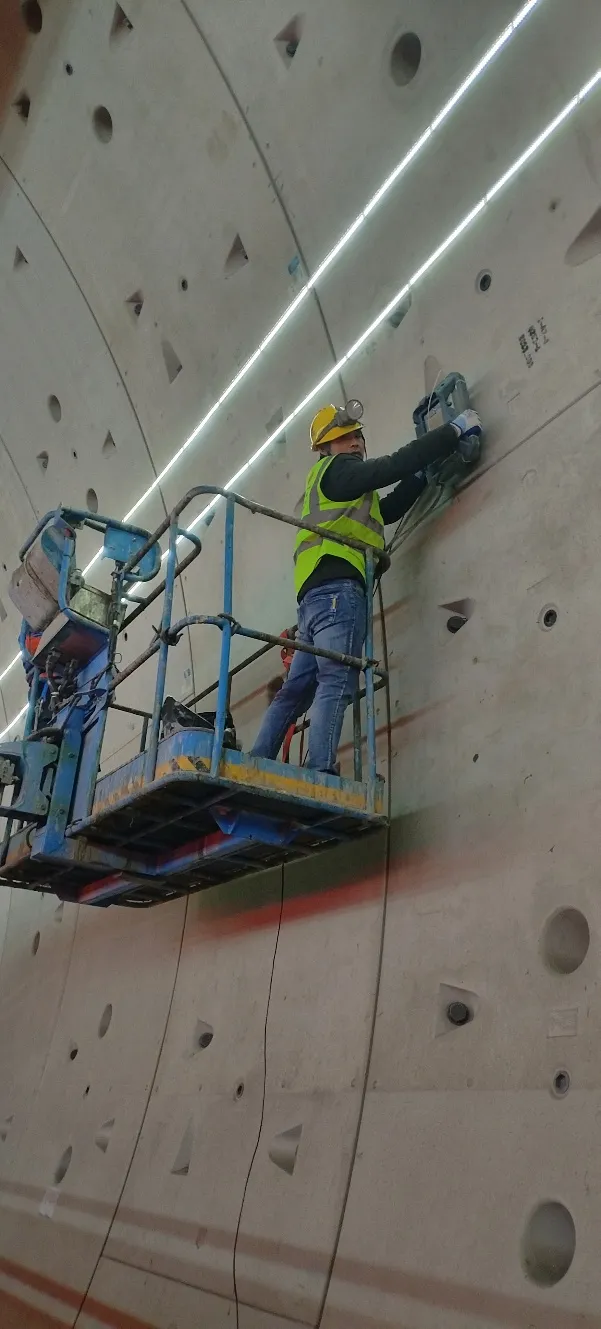
Figure 1. Elop Insight ultrasonic scanning for tunnel lining grouting detection and quality assessment in Shanghai, China.
Elop Insight provides a non-destructive alternative through high-density rolling ultrasonic scanning. The scanner can map tunnel lining thickness and identify indications of internal defects and potential voids across larger areas, providing engineers with spatial information that complements conventional point-based inspection methods.
How Elop Insight Creates Value for Tunnel Stakeholders
For Asset Owners and Operators
-
Reduced inspection and closure time: Rolling ultrasonic scanning enables rapid, non-destructive inspection and can support inspections during short maintenance windows or partial closures.
-
As-built quality documentation: For new tunnels, ultrasonic scans can provide a documented baseline of lining thickness and detected anomalies before handover and throughout the asset’s service life.
-
Targeted maintenance: High-density inspection data helps identify areas that require further investigation or repair, reducing the need to treat the entire tunnel lining as potentially defective.
-
Condition monitoring: Repeated scans can provide a basis for comparing tunnel sections over time and documenting changes following repair or maintenance.
For Inspectors and Engineers
-
Area-based inspection: Rolling scanning provides high-density spatial data across the inspected lining rather than relying only on individual sounding points or cores.
-
Depth-resolved ultrasonic imaging: SAFT-reconstructed B-, C- and D-scans help engineers evaluate the depth, extent and characteristics of detected anomalies.
-
Lining thickness mapping: Ultrasonic measurements can be used to assess lining thickness and identify areas where thickness varies from the expected or designed value.
-
Centralized 3D inspection data: Scan results can be uploaded to the Insight Portal, allowing inspection data to be reviewed and shared in a common 3D environment.
For Safer and More Sustainable Infrastructure
-
Early identification of hidden conditions: Detecting potential voids, debonding and thickness variations can help identify areas requiring further assessment before deterioration progresses.
-
Targeted repairs: Localizing potential defects can support more focused repair strategies instead of unnecessary intervention across large sections of the tunnel.
-
Extended asset life: Better condition information can support preventive maintenance and help avoid premature replacement or extensive rehabilitation.
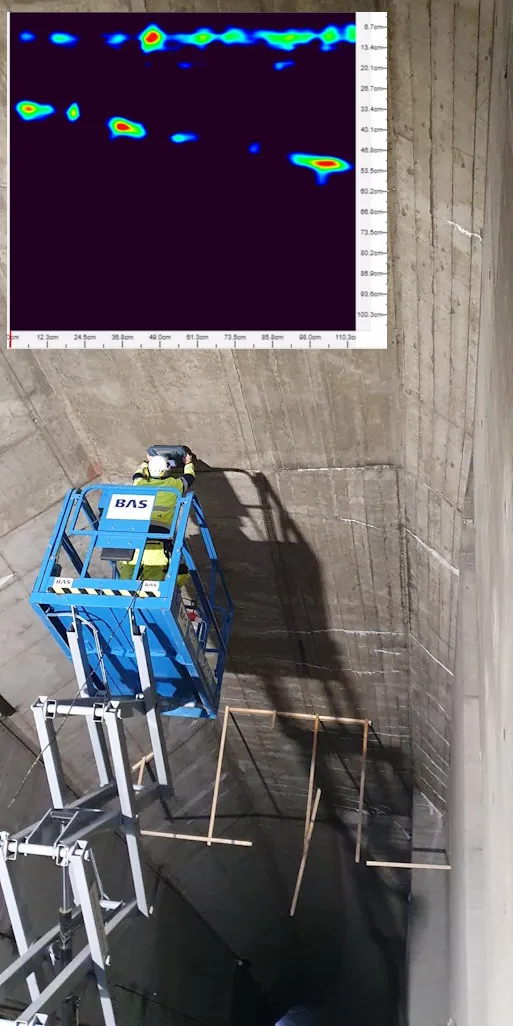
Figure 2. Insight scanner used in the tunnel, with the D-scan shown at top illustrating thickness variation from 30 cm to 50 cm across the measured area.
What Can Elop Insight Detect in Tunnel Linings?
Voids Behind the Lining
Ultrasonic scanning can identify indications associated with a loss of contact between the tunnel lining and the surrounding rock, backfill or grout. These indications can help engineers locate areas that may require further investigation.
Debonding and Layer Separation
The scanner can identify anomalies associated with interfaces between shotcrete layers, cast concrete and repair layers. SAFT imaging helps reveal the location and extent of subsurface reflections that may indicate poor bonding or separation.
Grouting Quality and Defects
Ultrasonic inspection can support the assessment of contact and backfill grouting by identifying areas with anomalous ultrasonic responses. This can be particularly valuable for quality assessment during construction and for investigating existing tunnels.
Tunnel Lining Thickness
Elop Insight can provide spatial information on lining thickness, helping identify areas of reduced or variable thickness. This can support verification of design requirements and investigation of potential over-excavation, insufficient lining or construction-related variations.
From Point Measurements to High-Density Tunnel Inspection
Conventional inspection techniques such as hammer sounding and core drilling provide important information, but they are generally limited to selected locations. Elop Insight complements these methods by collecting high-density ultrasonic data while scanning across the tunnel lining.
The resulting data can be reconstructed using Synthetic Aperture Focusing Technique (SAFT) to produce depth-resolved ultrasonic images. B-, C- and D-scan views help engineers visualize the spatial distribution of detected features and investigate their depth and extent.
This approach makes it possible to move from isolated inspection points towards a more comprehensive understanding of tunnel lining condition.
Practical Considerations
Ultrasonic scanning performs best on reasonably even and acoustically suitable surfaces. Heavily textured or irregular raw shotcrete may require surface assessment or preparation before scanning.
Tunnel geometry, curvature and overhead sections should also be considered during inspection planning. Elop can support the selection of appropriate scanning configurations based on the tunnel geometry, lining type and inspection objectives.
Ultrasonic scanning is primarily focused on the condition and geometry of the lining. Where the inspection objective extends beyond the lining into the surrounding rock or requires independent verification of a detected anomaly, complementary methods such as GPR or selective core drilling may be appropriate.
Documenting Tunnel Condition Over Time
Tunnel inspection is not a one-time activity. Condition information needs to remain available throughout the service life of the asset.
With inspection data stored in the Elop Insight Portal, scan results can be reviewed, shared and compared with previous inspections. This creates a digital record of tunnel lining condition and can help engineers determine whether a detected anomaly remains stable, has changed, or has been affected by subsequent repair work.
By combining rapid rolling ultrasonic scanning with 3D visualisation and digital data management, Elop Insight helps transform tunnel inspection from isolated measurements into a more systematic approach to condition assessment.
Supporting Smarter Tunnel Maintenance
Whether the objective is as-built quality verification, grouting assessment, lining thickness mapping, defect investigation or condition monitoring, Elop Insight provides a non-destructive way to collect high-density information from tunnel linings.
The result is better visibility of hidden conditions, more targeted follow-up investigations and a stronger documented basis for maintenance decisions.
Contact us to discuss how Elop Insight can support your tunnel inspection programme.