Honeycombing is one of the most common defects affecting concrete durability and structural performance. Traditional concrete inspection methods may struggle to identify hidden honeycombing beneath the concrete surface. The Elop Insight scanner uses dry-coupled ultrasonic technology to detect and visualize internal defects such as honeycombing and delamination without destructive testing.
What is Honeycombing in Concrete?
Honeycombing in concrete occurs when fresh concrete fails to completely fill the formwork during casting, leaving cavities, voids, and gaps between the aggregates that resemble a honeycomb structure. Improper or excessive vibration during concrete placement, poor workability of the concrete mix, overuse of admixtures, use of a stiff concrete mix, an excessive water-cement ratio, dropping concrete from excessive heights during placement, dense reinforcement at column-beam junctions, excessive use of large aggregates, poorly constructed or non-watertight formwork, and inadequate concrete cover are some of the common causes of honeycombing.
Honeycombing can significantly reduce the strength and durability of concrete structures. It increases the risk of reinforcement corrosion, allows water penetration through internal voids, reduces the service life of the structure, and negatively affects the appearance of exposed concrete surfaces. Ultrasonic testing is a well-established non-destructive testing (NDT) method for detecting honeycombing and other hidden defects within concrete structures.
Unlike conventional ultrasonic testing methods that require liquid couplants, the Elop Insight scanner uses dry-coupled rolling ultrasonic technology, allowing large concrete areas to be inspected rapidly with minimal surface preparation.
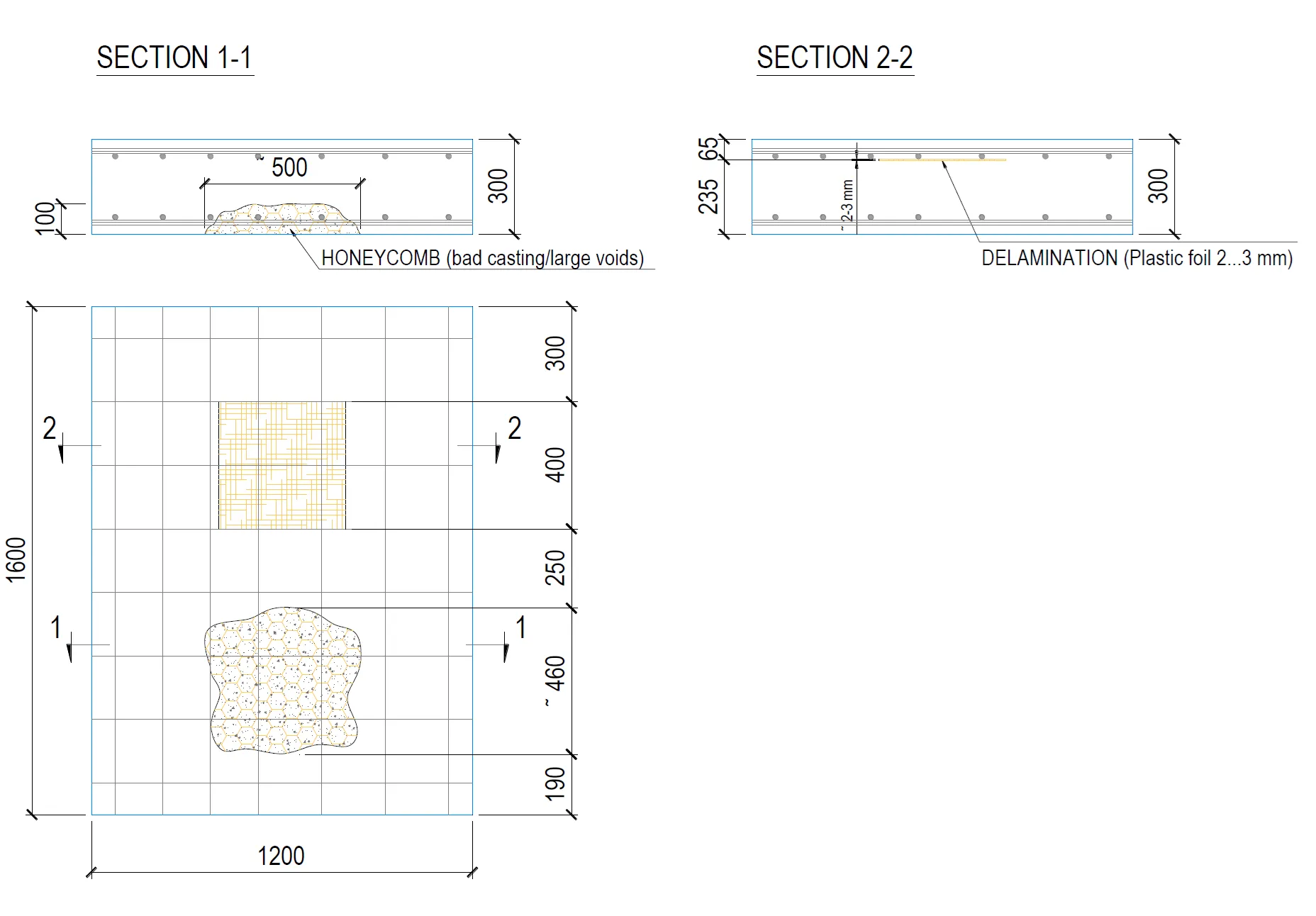
Figure 1. Concrete specimen containing artificial delamination and honeycombing defects manufactured as part of the Excon project. See Reference [1].
Detecting Honeycombing Using the Elop Insight Scanner
To demonstrate the capability of the Elop Insight scanner to detect internal defects such as delamination and honeycombing, a concrete specimen was manufactured. The results presented in Figure 2 demonstrate that the scanner successfully identified both delamination and honeycombing.
A C-scan acquired at a depth of 10–15 cm using a center frequency of 100 kHz revealed a clear and distinct reflection from a delaminated area measuring approximately 40 × 40 cm, closely matching the known defect location. Although honeycombing was not as clearly distinguishable through direct reflections—likely due to scattering caused by large aggregates—it was detected through characteristic shadowing in the backwall echo at a depth of approximately 30 cm. This shadowing became even more distinct when using a higher center frequency of 150 kHz and corresponded well with both the delaminated and honeycombed regions.
These results demonstrate that even when direct imaging is inconclusive, backwall shadowing provides a reliable indicator for evaluating the extent of internal damage such as delamination and honeycombing.
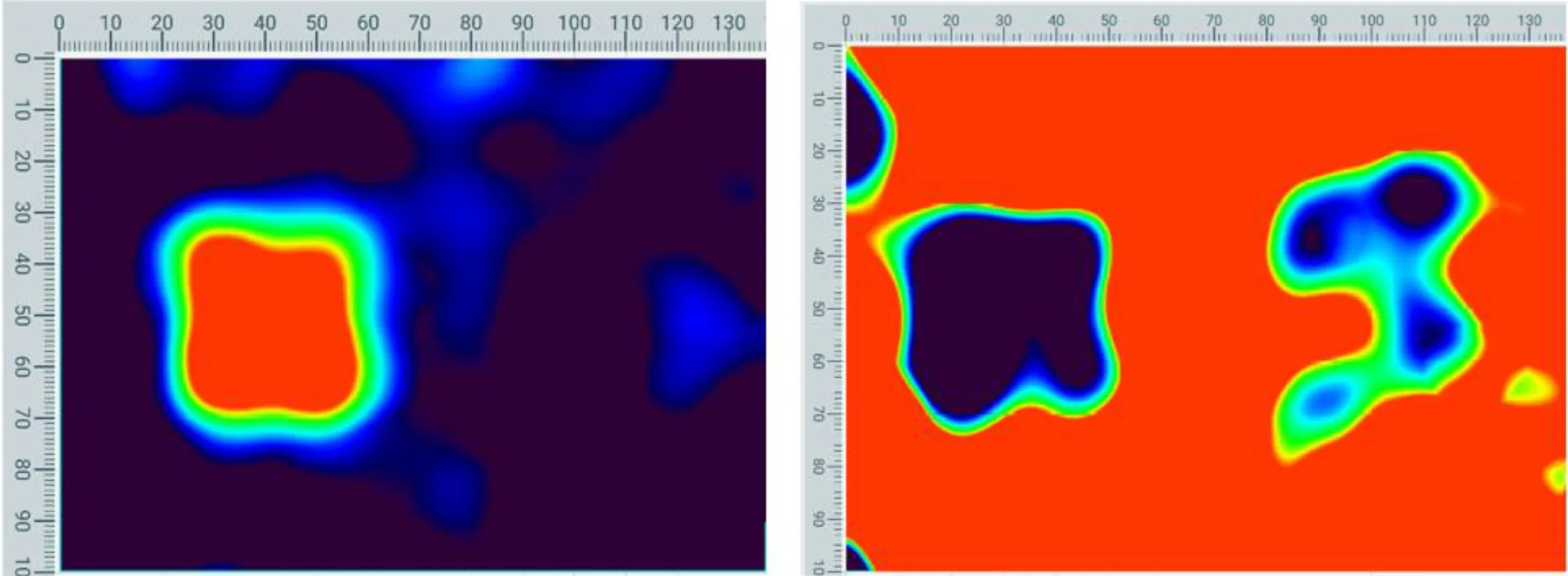
Figure 2. Elop Insight ultrasonic C-scan images showing delamination and honeycombing inside a concrete specimen.
Field Example: Honeycombing Detection in a Culvert
The Elop Insight scanner was also used to detect honeycombing and other internal defects in the headwall of a culvert at the interface between the headwall and the road embankment (Figure 3). The tomographic SAFT images generated by the scanner, together with the corresponding 3D reconstruction, provided accurate information on the location and depth of the honeycombing.
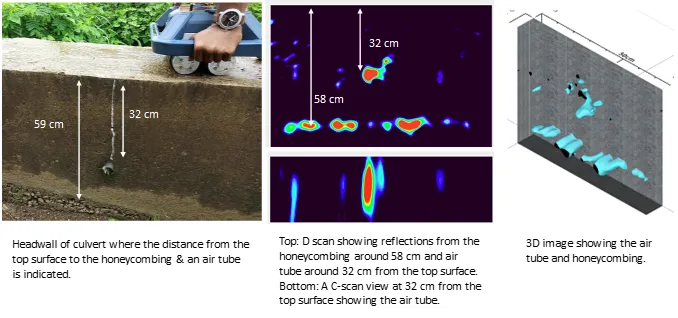
Figure 3. Elop Insight tomographic SAFT images showing an air-filled tube and honeycombing within a concrete culvert.
This information is essential for making a precise assessment of the extent of the damage, particularly in cases where honeycombing is not visible on the concrete surface. By providing accurate information about hidden defects, the Elop Insight scanner supports informed repair planning and preventive maintenance, helping to reduce inspection time, unnecessary repairs, and overall maintenance costs while improving the safety and durability of concrete structures.
Conclusion
Honeycombing can significantly affect the structural performance and long-term durability of concrete infrastructure if left undetected. The Elop Insight scanner enables engineers to identify honeycombing, delamination, and other hidden defects using dry-coupled ultrasonic tomography. By enabling fast, non-destructive inspection of large concrete structures, the Elop Insight scanner helps asset owners make informed maintenance decisions while reducing inspection time and minimizing unnecessary repair costs.
The technology enables efficient ultrasonic concrete inspection of large infrastructure elements, including bridges, culverts, tunnels, and buildings.
Learn more about Elop Insight
Discover how Elop Insight enables fast, non-destructive inspection of large concrete structures using dry-coupled rolling ultrasonic technology.
References
[1] Popescu, C., Täljsten, B., Chapagain, K. R., Bjerke, W., Zivkovic, J., Danner, T., & Nilsen, R. (2025). Development and verification of NDT for detecting voids in tendon ducts. SINTEF Report 2025:01222. Trondheim, Norway. ISBN 978-82-14-07344-7.